
The AI-Native Playbook: Three Tactics Incumbents Can Steal
AI-native companies aren't winning on better models; they're winning on three strategies any incumbent can steal. Learn how Morgan Stanley, Ericsson, and General Mills incorporated those tactics.
What separates AI-native companies from the rest is organizational, not technical
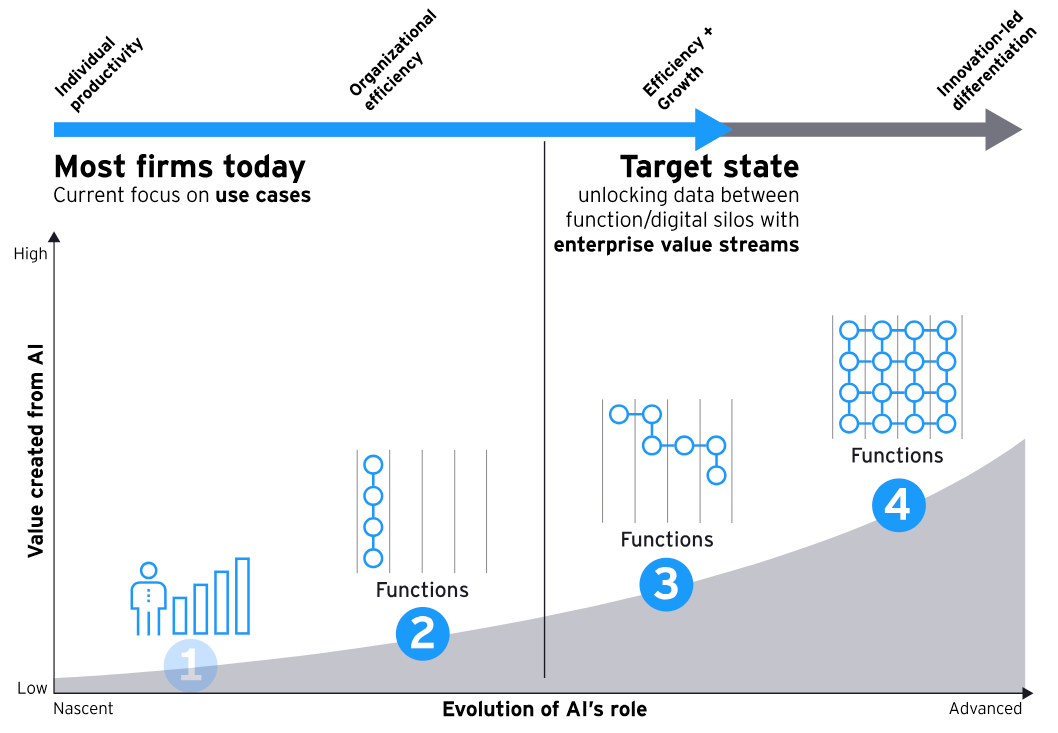
Up to 75% of AI's value gets stuck in the handoffs between functions
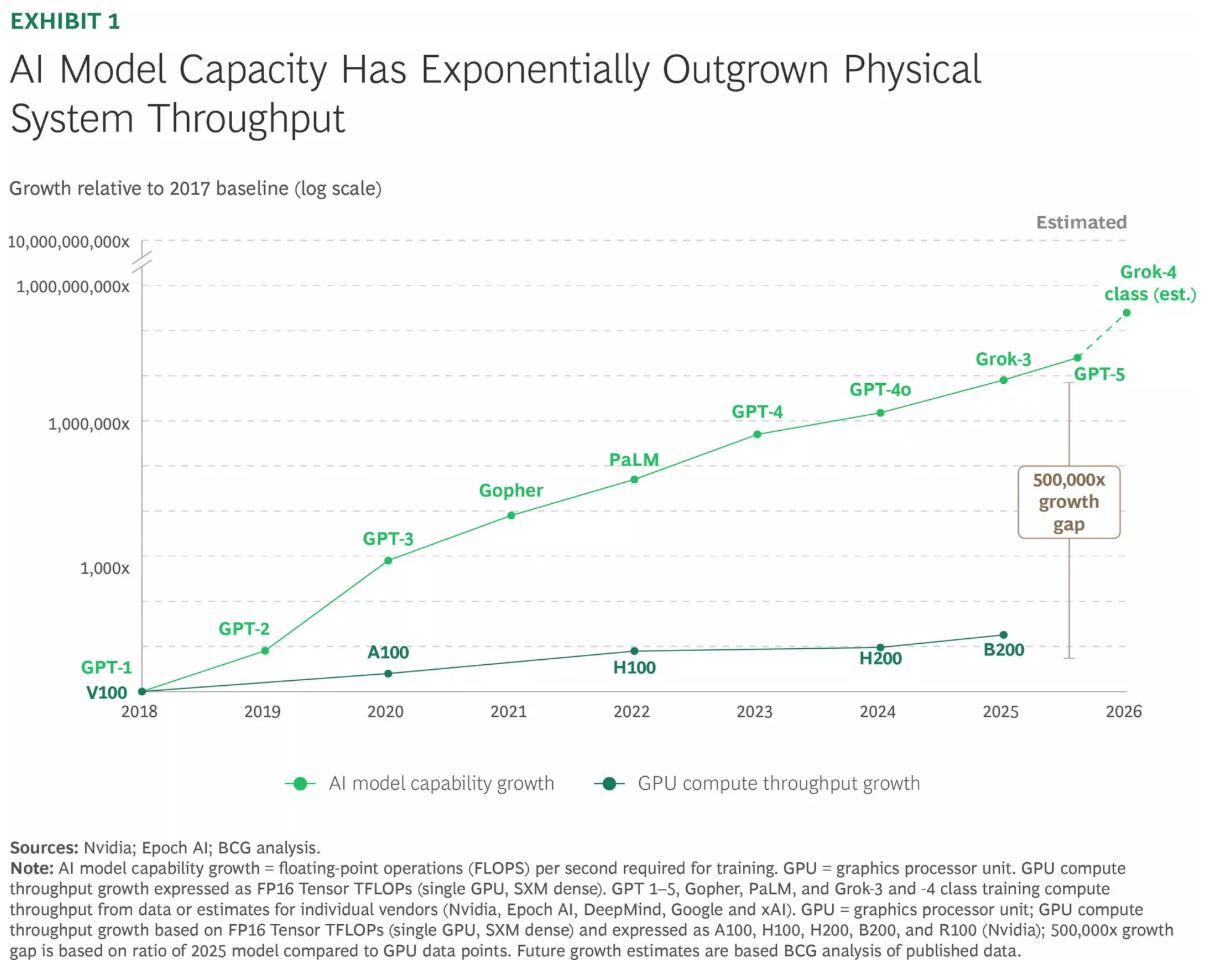
AI model ability outran computing power by 500,000 times from 2018 to 2025
On Friday afternoons at a fast-growing fintech company, work stops.
Instead, engineers, salespeople, and operations staff set aside their regular tasks and build their own AI agents. This ritual comes from the top, and there are no exceptions. Even the chief executive has to sit down and build one. To a traditional manager, this may look like a waste of a workday. But at an AI-native company, that is exactly the point.
This real scene at an anonymized company was included in a McKinsey study of 15 companies that are “AI-native:” built around AI from the start. These are not marginal players. Sierra, an AI-native customer service firm, reached a $15 billion valuation within three years. The routine the McKinsey study describes raises an uncomfortable question for every large enterprise. Organizations can buy the same AI models used by other organizations, possibly even from the same vendors. So why does the output look nothing alike?
The answer is organizational, not technical. Most enterprises treat becoming AI-native as a technology problem: buying more models and tools while their operating model stays the same. But evidence from AI-native leaders shows the issue is much more fundamental. A close examination of the companies catching up to AI-native organizations demonstrates how decisions, knowledge, and leadership are the most influential factors.
AI Disruptors Set an Example for What’s Possible
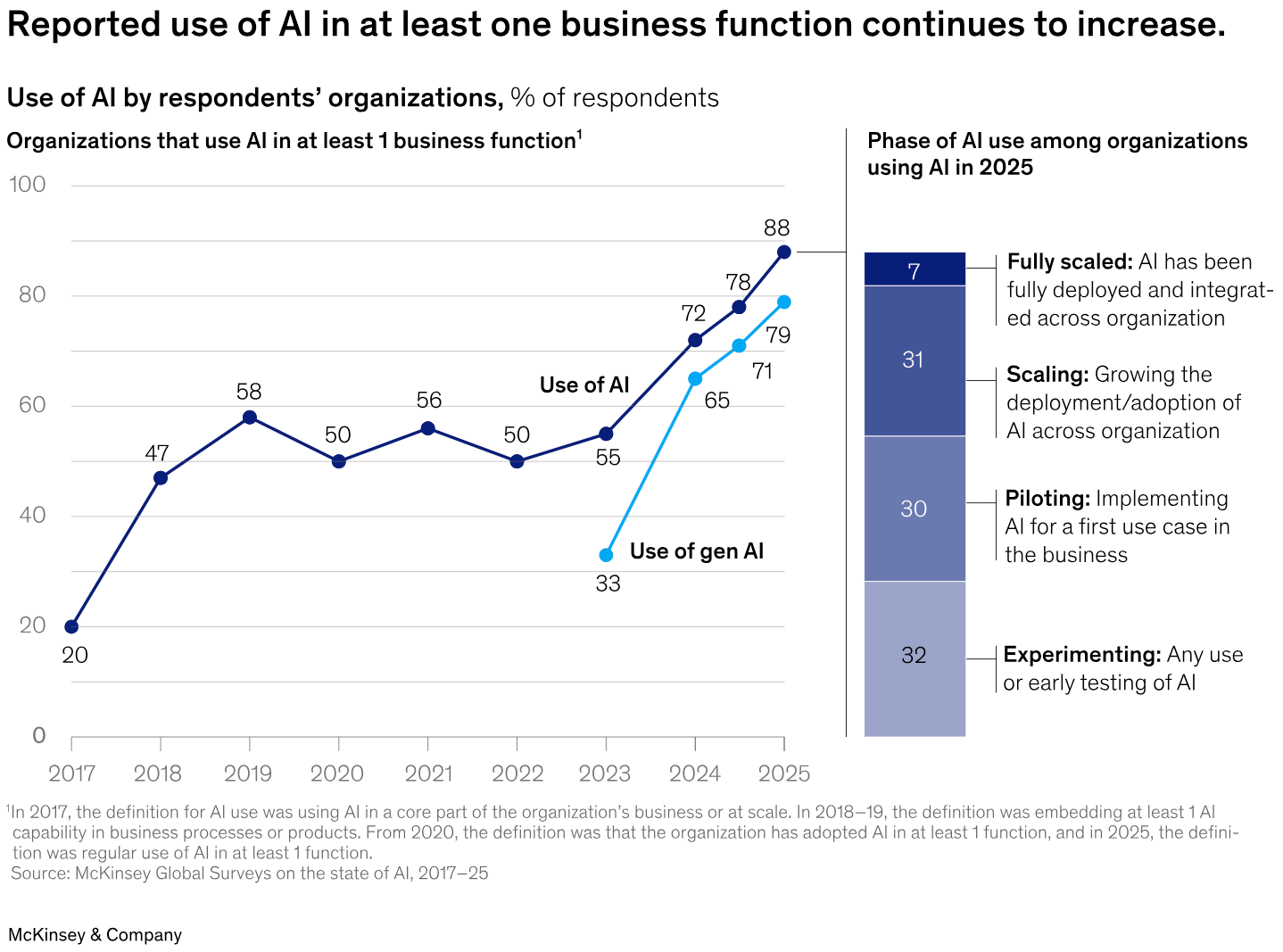
Almost every company now uses AI in some capacity. McKinsey found that 88% of organizations use it in at least one business function, yet only about 1% consider themselves fully mature, and roughly two-thirds have never moved a project past the pilot stage. Tools are pervasive, but success in using them is not.
Aside from dedicated time on Fridays for innovation, consider the incredible advantages that AI maturity is providing at AI-native companies. Sierra, an AI-native customer service company, builds agents that resolve customer problems from start to finish. The organizational difference shows up in how it charges: clients pay for each resolved case, not for software seats. That means Sierra only makes money when the AI finishes the job without a human, so every incentive inside the company points toward giving the agent more of the work. A traditional contact center does the reverse, growing its revenue and its headcount together. BCG reports Sierra resolves about 70% of issues on its own and reached roughly $150 million in ARR at a valuation above $15 billion by early 2026.
Glean, a work AI platform that doubled its recurring revenue in nine months to reach $250 million by late 2025, made a different structural choice. Rather than adding another tool to the pile, it built one intelligent layer that works across the dozens of disconnected systems a company already owns. An employee can ask a question once instead of hunting through six places. Its organization is designed around what AI is good at; most enterprises do the opposite, buying the AI and leaving the organizational structure untouched.
When a company adjusts workflows around AI instead of relegating it to a supporting role, the work itself changes shape. A study by Perplexity and Harvard Business School found that on matched tasks, AI agents performed 48 times more machine work at 94% lower cost, moving human employees to a supervisory position relative to AI. This kind of shift is only possible if the surrounding work structure changes with it. Most large companies take the opposite approach: layering AI on top of existing workflows.
A recent BCG study makes an ancillary point that adds further pressure on organizations. Between 2018 and 2025, the growth in what AI models can do outran the growth in raw computing power by 500,000 times. Capability is compounding faster than surrounding systems can absorb. For an enterprise, that means the cost of an organizational operating model that cannot keep up grows every year the curve steepens. The companies that redesign how they work capture each new capability as it arrives. The ones that do not are handed a more powerful tool every year and keep getting the same result from it. Matching the acceleration of AI innovation requires faster, more comprehensive shifts.
BCG studied 1,000 private companies and found that standout AI disruptors share three repeatable traits:
- They put AI in charge of the whole task
- They redesign their work around what the technology is good at
- They turn their messy internal information into something the machine can use.
In the case studies below, we’ll examine Morgan Stanley, Ericsson, and General Mills. While none of these organizations are startups or AI-native (quite the opposite), each one rebuilt a single part of its business the way an AI-native company would, and each achieved a result worth studying. By studying their example, non-AI-native organizations can emulate the success of AI-native startups and apply these strategies to their own initiatives.
What Do AI-Native Companies Do Differently?
Most enterprises fall into the same three traps that AI-native companies are able to avoid:
- Trapped knowledge
- Broken handoffs
- Authority bottlenecks
First, trapped knowledge. In many large companies, the information a worker needs is scattered across documents, systems, and individuals. A new employee might take months to learn where everything is. When a company deploys an AI tool on top of that mess, the tool inherits the mess. It cannot answer a question if it cannot reach the information.
Picture a new financial advisor whose client asks about a specific investment risk. The answer is in a research report the firm published three years ago. But the advisor doesn’t know that. The knowledge is in the building, but just out of reach. AI-native companies fix this first. They build what you might call a knowledge layer, a single place the AI can search, so the machine can actually find the answer.
The second problem, broken handoffs, can be thought of as a communication breakdown. Work in a big company passes between departments, and value leaks at every corner. Sales does not talk to the network team, the network team does not talk to billing. EY estimates that up to 75% of AI's value gets stuck between functions rather than inside any one of them. Bolting AI onto a single department does not fix a problem that lives in the spaces between departments.
Finally, the third problem is authority bottlenecks. In a traditional company, decisions climb a ladder. A frontline worker spots something, tells a manager, who tells a director, who approves it days later. Bain found that the best-performing companies push decisions down to the front line instead of sending every choice up the chain, because the old way breaks down at scale. AI-native companies let software handle routine calls and leave humans for the exceptions. And increasingly, AI-native organizations are abandoning traditional hierarchical structures, flattening them in favor of speed and adaptability.
Morgan Stanley: Reaching Trapped Knowledge
Morgan Stanley’s financial advisors sat atop a vast library of proprietary research, but finding the right document could take 30 minutes or more. The knowledge existed, advisors just couldn’t get to it fast enough to help a client in the moment.
Working with OpenAI, the firm built an internal assistant powered by GPT-4 that lets advisors ask a plain-language question and get an answer drawn from the firm's own research. The key word is reachable. The firm went from a system that could answer about 7,000 questions to one that can pull from a library of 100,000 documents. According to Morgan Stanley, document retrieval efficiency rose from 20% to 80%, and 98% of advisor teams adopted the tool.
"This technology makes you as smart as the smartest person in the organization. Each client is different, and AI helps us cater to each client's unique needs."
—Jeff McMillan, Head of Firmwide AI, Morgan Stanley
The governance piece is what makes this repeatable. Before any tool went live, Morgan Stanley built an evaluation framework to test every use case for accuracy. And a human still reviews every client-facing output before it goes out. Trust came first, autonomy followed.
Ericsson: Orchestrating Across Silos
A telecom company runs on data spread across separate worlds: customer information in one system, network performance in another, revenue and billing in a third. No single team, and no single tool, could see across all of them at once. That is the 75% problem EY describes: value stuck between functions.
Ericsson's answer was to stop treating each system as its own island. The company built a setup where an orchestrator agent takes one goal and splits it across specialized agents, one focused on customer experience, one on revenue, one on the network, all drawing from a single shared data pipeline. Instead of a person stitching together three tools, the software coordinates the work across them. Ericsson projects that its agentic troubleshooting system will reduce network downtime and customer support cases by more than 20%.
Ericsson paired the design with clear guardrails. Its agents are sorted by how much freedom they have, and human administrators direct the orchestrators rather than letting them run loose. The system can even draw a live map of the steps each agent took, so a person can see and trust what the machine did. Multi-agent coordination like this is becoming the standard way large companies get multi-agent AI to work across boundaries.
General Mills: Letting the Front Line Decide
General Mills makes thousands of shipping decisions every day, and the old way of planning them was slow and episodic. A decision that should take a second could wait in a queue for a person to get to it.
The company built an always-on system, developed with Palantir, that assesses more than 5,000 shipments a day and produces hundreds of recommendations. Here’s how their workflow mirrors AI-native organizations: the software acts on the routine decisions itself and only flags the unusual ones for a human. Roughly 70% of its recommendations are accepted automatically, and the rest go to a person for review. The company told investors last year that the effort has produced more than $20 million in supply chain savings since fiscal 2024.
"We now are so connected in understanding that it's not requiring an individual to go off and find the information — the information is already available, and it's prompting us with optionality around what to do."
—Paul Gallagher, Chief Supply Chain Officer, General Mills
The design keeps humans where they matter. General Mills’ approach is authority pushed to the front line by design, with a human backstop for the hard cases.
What Should Incumbents Do?
Return to that fintech organization and its Friday afternoons. The habit on display there is not really about building agents: it’s about a company wired so that knowledge is reachable, work flows across boundaries, and decisions happen where the action is. Morgan Stanley, Ericsson, and General Mills each rebuilt one of those things inside a business far older and more complex than any startup.
Legacy, or incumbent organizations can adopt the operating habits of AI-native companies one function at a time. AI transformation that lasts starts with the way work is organized, not with the size of the model. So before you approve the next tool or the next upgrade, take one AI project that is underperforming and ask a sharper question. Is it failing because the knowledge is trapped, because the handoffs are broken, or because the authority is stuck at the top? The answer will probably indicate where you should start.
.avif)
Frequent Asked Questions
What is one step to fix a stalled AI project?
Take one underperforming AI deployment and ask which of three problems it faces: trapped knowledge, broken handoffs, or authority stuck at the top. The answer tells you what to address. The model was probably never the problem, so investigate the workflow before approving the next tool or upgrade.
How did Morgan Stanley improve its AI results?
Morgan Stanley built a knowledge layer its AI could actually search, moving from a system answering about 7,000 questions to one drawing on 100,000 documents. Document retrieval efficiency rose from 20% to 80%, and 98% of advisor teams adopted the tool. Every client-facing output is still reviewed by a human.
Do you need better AI models for organizational success?
No. Almost every company already has capable models. McKinsey found that 88% use AI in at least one function, yet only about 1% are fully mature. The constraint is how work is organized around the model, not the model itself. The companies pulling ahead redesign how knowledge, coordination, and authority flow, rather than buying a new model.
Why do most enterprise AI projects stall?
Most stall because companies add AI tools on top of an unchanged operating model. Knowledge stays trapped in silos, value dies in handoffs between functions, and decisions still climb an approval chain. McKinsey found roughly two-thirds of organizations never move AI past the pilot stage, even though 88% use it somewhere.
What does it mean to be an AI-native company?
An AI-native company is built so that AI does whole tasks, not just assists with them. The defining trait is organizational, not technical: knowledge is reachable, work flows across departments, and routine decisions happen at the front line. McKinsey found the difference between these firms and everyone else is organizational, not a matter of technology.


.svg)


_0000_Layer-2.png)

