
AI in Product Development: Lessons from Mondelēz, Airbus, Insilico
AI R&D is compressing timelines from years to months—but speed without governance creates new risks. Three case studies show how leading companies balance acceleration with accountability.
AI is delivering 10-100x productivity gains in R&D across industries. Companies are seeing 30x hit rates, 10,000x faster simulations, and breakthrough results.
Speed without governance creates risk, not value in AI product development. Winners pair AI acceleration with human oversight, IP protection, and rigorous validation.
The innovation spending paradox is reversible with disciplined AI implementation. McKinsey estimates $360-560B in annual value when companies balance speed with control.
Dr. Stanley Prusiner spent decades chasing cures for diseases that destroy the mind. A Nobel laureate, Prusiner leads the Institute for Neurodegenerative Diseases at UC San Francisco, targeting Alzheimer's and Parkinson's: conditions that affect nearly 60 million people worldwide and have resisted major drug attempts for generations.
For years, his team followed standard procedure, screening hundreds of thousands of compounds and waiting months only to end up with a handful of weak leads. The process was slow, expensive, and inefficient.
Then Prusiner tried something different. His institute partnered with SandboxAQ, a company using AI-powered molecular simulation to predict how drugs interact with their targets. The results stunned his team. Their hit rate—the percentage of tested compounds that showed promise—increased more than 30 times. The number of molecular possibilities they could explore expanded by over 22 times. Work that once took years now happens in months.
"Our collaboration with SandboxAQ is accelerating lead optimization and is on track to take several years off our discovery timelines," Prusiner said.
As this piece explores, timeline reduction is a theme of AI in product development. A biotech startup, an aerospace giant, and a global snack maker don't share much, except that each is using AI to collapse R&D timelines. Insilico Medicine, Airbus, and Mondelēz (Oreo’s parent company) offer organizations a blueprint for what AI product development looks like when it's governed well.
Yet speed alone doesn't guarantee success. The companies capturing real value from AI R&D are moving fast because they’ve built the guardrails to sustain it.
The Innovation Spending Paradox
Companies are spending more on research and development than ever before, yet getting less for their money.
In pharmaceuticals, the pattern is stark. Between 1950 and 2010, the number of new drugs approved per billion dollars of R&D spending dropped roughly 80-fold (when adjusted for inflation). Today, bringing a single new therapy from concept to clinic averages 10 years and costs over $2.5 billion, with 90% of candidates failing along the way.
The semiconductor industry tells a similar story. To maintain the steady doubling of computing power known as Moore's Law, chipmakers had to increase their R&D spending 18-fold between 1971 and 2014.
Examples of success with AI in product development venture far outside pharmaceuticals. Here, we also cover case studies from an aerospace manufacturer (Airbus) and a multinational snack and beverage company (Mondelēz International).
"AI could unlock between $360 billion and $560 billion in annual value by accelerating R&D across industries."
—McKinsey, 2025
AI product innovation offers a way out of this productivity trap. According to McKinsey, AI R&D applications could unlock between $360 billion and $560 billion in annual value. Boston Consulting Group projects that companies embracing AI product development processes could see 10-20% reductions in time-to-market and up to 20% lower R&D costs.
AI speeds up research in three main ways:
- It generates new designs far faster than humans working alone.
- It tests those designs virtually, using simulations that can replace months of work.
- It automates the routine work that bogs down research teams.
But turning this potential into real results requires a strategic approach that pairs speed with discipline. The following three case studies show how leading companies are doing exactly that.
#1: AI Found the Target, Designed the Molecule, and It's Heading to Phase 3
When AI generates a new drug molecule or product design, a thorny question emerges: who owns it?
Current intellectual property law wasn't written for machines that invent, and the U.S. Copyright Office has rejected applications for AI-generated works that lack sufficient human authorship. Patent law remains equally unsettled.
This legal uncertainty creates real business risk: intellectual property becomes harder to protect than expected, and trade secrets can be inadvertently exposed when sensitive data gets fed into AI platforms.
Insilico Medicine, a biotech company based in Hong Kong and Cambridge, took a counterintuitive approach: radical transparency.
“This study represents a critical milestone in AI-powered drug discovery and in my life to date. While we expected the drug to be safe, we did not expect to see such a clear dose-dependent efficacy signal after such a short dosing period.”
—Alex Zhavoronkov, PhD, Insilico CEO
The company used its Pharma.AI platform to tackle idiopathic pulmonary fibrosis, a devastating lung disease with few treatment options. The AI did something unprecedented—it both identified a novel drug target (a protein called TNIK) and designed a novel molecule to hit that target. This was a world first: both the target and the drug were discovered entirely by AI.

Insilico went from project start to preclinical candidate in just 18 months—compared to the four to six years this phase typically requires. The cost: $2.6 million, a fraction of the $400 million-plus that traditional approaches demand. By late 2024, the drug (now named Rentosertib) had completed Phase 2a trials with positive results and is heading toward Phase 3.
Rather than keeping their methods secret, Insilico published the entire AI R&D journey—from AI algorithms to clinical trial results. They openly shared their development benchmarks and timelines.
This transparency served multiple purposes. It established a clear record of human involvement in directing the AI, which strengthens intellectual property claims. It built credibility with regulators, partners, and investors who could verify the science. And it created industry benchmarks that demonstrated what AI product development and AI-driven R&D could actually achieve.
In a legal landscape still catching up to AI R&D, documented transparency may be your best protection. When you can prove exactly how humans guided the AI process, you build a stronger foundation for IP claims—and a stronger reputation with the partners who matter.
#2: From 1 Hour to 30 Milliseconds: Airbus + AI Simulation
AI simulations can test thousands of designs in the time it takes to build one physical prototype. But virtual models, no matter how sophisticated, can miss failure modes that only show up in the real world. A simulated airplane wing might perform beautifully in software and crack under actual stress.
For safety-critical industries, this gap between simulation and reality is also a regulatory one. The FDA, FAA, and other agencies still require human accountability for decisions that affect lives. Digital twins and AI surrogate models can accelerate AI product development, but they can't replace physical validation.
Airbus, the European aerospace giant, found a way to get the speed benefits of AI simulation while maintaining the rigor that aviation demands.
The company partnered with Neural Concept, a Swiss startup specializing in deep learning for engineering applications. Their challenge was that aerodynamic simulations using traditional computational fluid dynamics take hours or even days to run. This limits how many design alternatives engineers can realistically explore.
Neural Concept trained AI surrogate models on Airbus's existing simulation data. These models learned to predict aerodynamic behavior without running the full physics calculations each time. The results were dramatic. Prediction time dropped from one hour to 30 milliseconds—a 10,000-fold speedup. Engineers could now explore 10,000 more design options in the same amount of time.
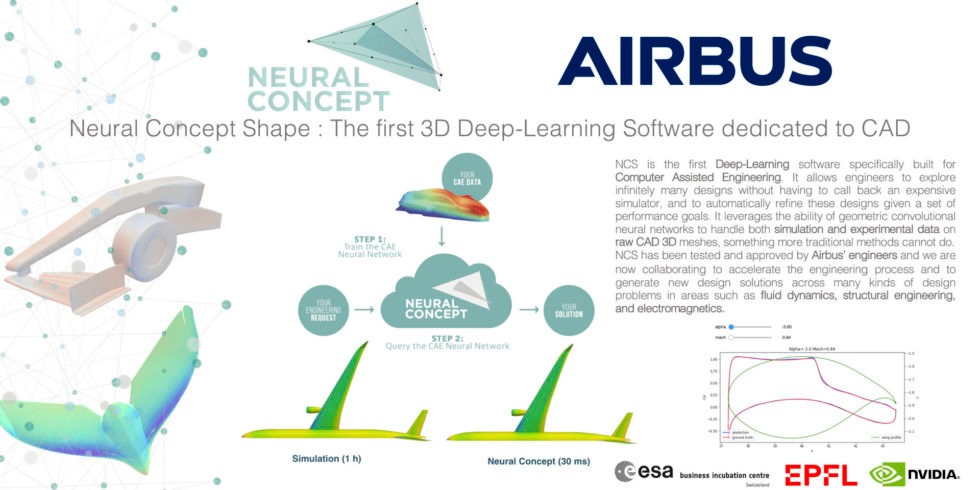
To make this approach work, Airbus used AI to rapidly screen possibilities, then validated the most promising candidates against physical experiments and high-fidelity simulations. Human engineers retained final authority over design decisions.
Use AI to expand what's possible to test, not to skip testing altogether. The fastest path to market for AI product innovation still runs through physical reality—AI just helps you get there with better candidates.
How the Makers of Cadbury and Oreo Are Adding AI to the Equation
In product development, unreliable outputs can mean failed launches, safety issues, or wasted resources. Security adds another layer of complexity. When companies feed proprietary formulas, customer insights, or competitive intelligence into AI systems, they risk exposing sensitive information—especially if those systems use inputs to improve their models.
Mondelēz International, the snacking giant behind Oreo, Cadbury, and dozens of other brands, addressed these challenges by keeping humans firmly in control of AI-assisted product development and AI R&D workflows.
“AI frees up people’s capacity to get to the fun stuff.”
—Joe Manton, Mondelēz International Senior Director: Digital R&D
The company deployed an AI product development tool that helps formulators create new products faster. The system analyzes ingredient interactions, consumer preferences, and market trends to suggest promising formulations.
But Mondelēz makes a crucial distinction. As a representative told Confectionary News, "These are not AI recipes—all include a human touch." Human creators define parameters, review outputs, and make final decisions.
As a result, Mondelēz has created 70 SKUs using this AI-assisted approach.
When experienced formulators review AI suggestions, they catch errors that algorithms miss. They apply tacit knowledge that no dataset can fully capture. And they maintain accountability for the final product in ways that purely automated systems cannot.
AI R&D works best as augmentation, not automation. Human oversight isn't just a safety measure—it's a quality measure that catches the mistakes AI inevitably makes.
AI R&D Is a Speed-Plus-Governance Game
AI is compressing innovation timelines across industries. Drug discovery from decades to years, aerospace simulations from days to milliseconds, and AI product development cycles from months to weeks.
But the companies capturing real value pair acceleration with governance: protecting intellectual property through transparency, validating AI outputs against physical reality, and keeping human expertise at the center of the process.
Dr. Prusiner's collaboration with SandboxAQ works precisely because it combines AI's speed with rigorous scientific discipline. The AI generates possibilities at superhuman speed; humans decide which to pursue.
For enterprise leaders, AI-powered innovation offers a game-changing new reality when the right guardrails are in place.
.avif)


.svg)


_0000_Layer-2.png)

